
Renewable Energy in Ukraine
 +380 (66) 508-07-64
Utility-scale and commercial solar projects differ in size, ownership, financing, applications and electricity generation. This guide explains the seven key differences to help investors and businesses choose the right photovoltaic solution.
The following table provides a quick comparison of utility-scale and commercial solar projects.
| Key Difference | Utility-Scale Solar | Commercial Solar |
|---|---|---|
| Size & Capacity | Typically multi-megawatt projects | Typically rooftop and small ground-mounted systems |
| Purpose | Generate electricity for the grid | Reduce on-site electricity costs |
| Capital Investment | High CAPEX | Moderate CAPEX |
| Operation & Maintenance | Dedicated professional O&M | Relatively simple maintenance |
| Land Requirements | Large ground-mounted sites | Usually rooftops, carports or small land plots |
| Power Output | Utility-scale electricity generation | Primarily for on-site consumption |
| Government Incentives | Often project-specific | Depends on local business support schemes |
What Is a Utility-Scale Solar Power Plant?
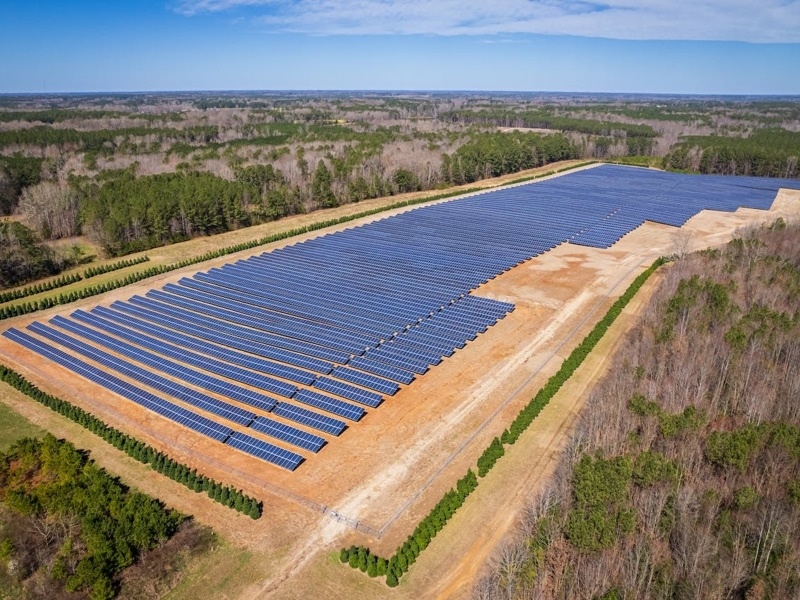
A utility-scale solar power plant is a large solar energy system designed to generate electricity on a commercial scale. Utilities, independent power producers (IPPs) and energy companies typically own and operate such solar power plants, which are situated in areas with abundant sunlight and space.
Utility-scale solar power plants typically consist of large arrays of solar modules that capture sunlight and convert it into electricity. The solar panels can be mounted on fixed structures or special systems that track the movement of the sun throughout the day, maximizing their exposure to sunlight. The solar panels generate electricity that is fed into the grid and then distributed to energy consumers like homes and businesses.
What Are Commercial Solar Systems?
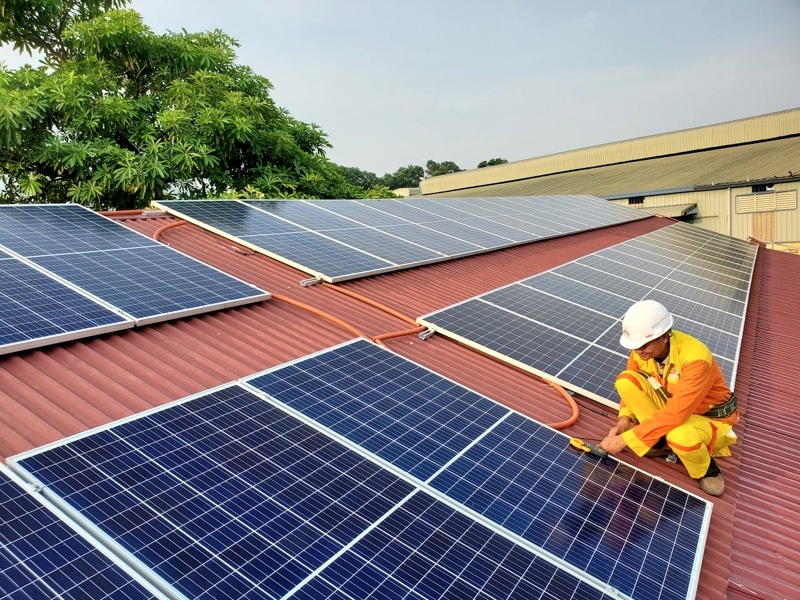
Commercial solar systems are photovoltaic installations designed to supply electricity to commercial and industrial facilities, while similar small-scale systems are also widely used in residential applications. These systems are typically installed in sunlit areas such as rooftops or other locations to generate electricity for the property owner’s personal use, e.g. self-consumption or net-metering models.
Commercial solar systems typically consist of solar modules, inverters, cables and, optionally, battery energy storage. The solar modules capture sunlight and convert it into DC electricity, which is then converted into AC electricity by the inverter. The solar PV system generates electricity, which can be used immediately or stored in battery energy storage systems for later use.
The Seven Key Differences Explained:
1. Size and Capacity. The most significant difference between a utility-scale and other solar power plants is their size and capacity. Utility-scale solar power plants are massive and powerful, often covering tens or hundreds of hectares and generating many megawatts of electricity. In contrast, solar systems for homes and businesses are typically smaller, covering fewer areas and generating less electricity. Utility-scale, commercial, and residential solar systems can also be called big, medium, and small PV installations, taking into account their typical capacities.
2. Purpose. The purpose of a utility-scale solar power plant is to generate electricity at utility scale and sell electricity into wholesale electricity markets. The main goal is to generate as much electricity as possible and sell it into the electrical grid. On the other hand, the purpose of solar for home and business systems is to generate electricity for personal use and reduce reliance on the electrical grid. These systems are typically designed to meet the energy needs of a property owner and may not even generate enough electricity to sell back to the grid.
3. Cost. The CAPEX of a utility-scale solar power plant is much higher than that of any other commercial PV system. Utility-scale solar power plants require significant investment in equipment, land, and infrastructure, making it an expensive option. In contrast, commercial solar systems are much more affordable and able to recoup initial investment through energy savings over time.
4. Operation and Maintenance. Utility-scale PV power plants require regular and relatively expensive maintenance to ensure that they are operating at maximum efficiency. Accessing and repairing big PV farms located in remote areas can be more difficult. In contrast, residential and commercial solar systems are relatively easy to maintain, with homeowners and businesses able to perform basic maintenance tasks themselves on-site.
5. Environmental Impact. While both utility-scale solar power plants and commercial and residential solar systems are considered environmentally friendly, there are some differences in their impact. Operating utility-scale solar power plants requires significant land, which can impact local ecosystems. In contrast, commercial and residential solar systems have a smaller area and can be installed on existing structures like rooftops and carports, minimising environmental impact.
6. Power Output. The energy output of a utility-scale solar power plant is significantly higher than that of smaller PV installations. These power plants are designed to generate large amounts of electricity for the power grid. In contrast, solar for home and business systems are designed to meet local energy needs, which are typically lower.
7. Government Incentives. Many countries around the world offer government incentives for the installation of solar power systems, but existing support programs may vary depending on the size and type of PV systems. In some cases, utility-scale solar power plants may be eligible for larger incentives due to their size and contribution to the electrical grid. However, in other cases, governments may offer more generous incentives for commercial and residential solar systems, as they are seen as a way to reduce the strain on the electrical grid and promote energy independence.
Conclusions
Utility-scale and commercial solar projects serve different purposes and differ in scale, ownership, investment requirements and electricity generation. Understanding these differences helps businesses and investors choose the photovoltaic solution that best fits their objectives.
Learn more about Avenston’s approach to renewable energy projects through our Project Development, Investment Partnerships, Project Implementation, and Asset Management, or explore everything we do in What We Do.
Read more:
1 MW — AC or DC? Clarification from NKREKP
AVENSTON received a clarification letter from NKREKP on the important issue for investors regarding the mechanism for calculating the installed capacity of facilities of legal entities that produce electricity from solar energy.
Versions of BIPV systems
The number of home owners who are interested in switching to renewable energy sources is growing. The use of BIPV solar systems to replace traditional building materials provides new opportunities for combining renewable energy and architectural solutions.
The use of solar panels in commercial enterprises
The use of renewable electricity sources is becoming more and more common in the world. The fact is that energy tariffs are constantly growing, and environmental requirements are becoming more stringent.
Solar Market Outlook for 2021-2025
Solar market again reached a new annual record of 18% growth, with 138 GW installed in 2020. Fortunately, global demand for solar installations did not shrink at all despite COVID-19.