
Renewable Energy in Ukraine
 +380 (66) 508-07-64
As PV technology develops, and as PV equipment grows and can be used for technological purposes, solar technologies move from large cities through suburbs to rural areas. This is shown in the IFC chart (International Financial Corporation, structure of the World Bank Group), see Fig. 1.
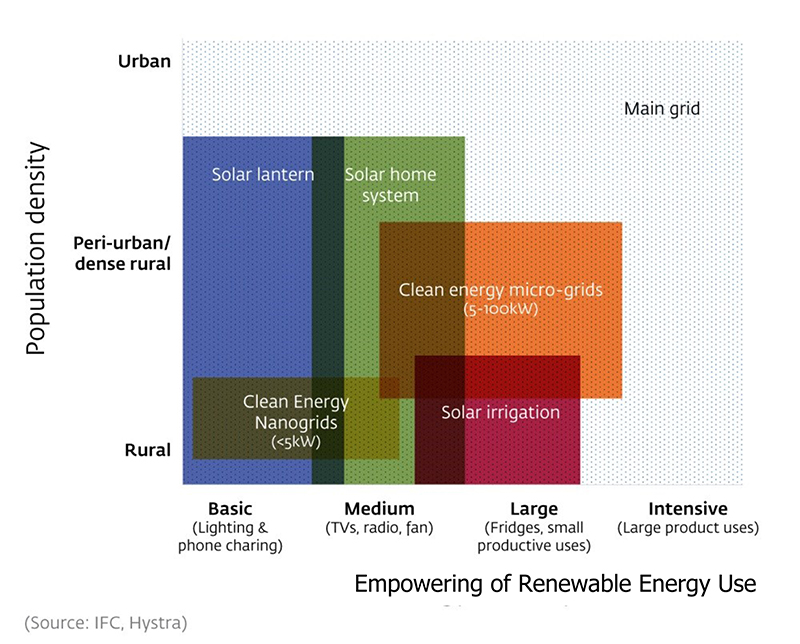
Pic. 1. Change of technological opportunities in the distribution of PV networks in rural areas. A source:IFC, 2017.
Agrivoltaics becomes mainstream and opens up new, unprecedented prospects for the development of commodity agricultural production, while simultaneously solving the problems of energy supply for these processes. The concept of agrivoltaics is much deeper, more meaningful and more promising than simply placing nearby PV stations and agricultural plots nearby. It is possible to provide drip and dosed watering, water injection into reservoirs for water supply. You can accumulate 24-hour regeneration in the form of water under pressure. And at the same time, it is possible to control the level of solar radiation that comes to plants, combining with active control and correction of nutrient and moisture content in the soil… By the way, only by creating optimal shading the yield of many vegetable crops increases by 30-70% – the conclusion of authoritative studies.
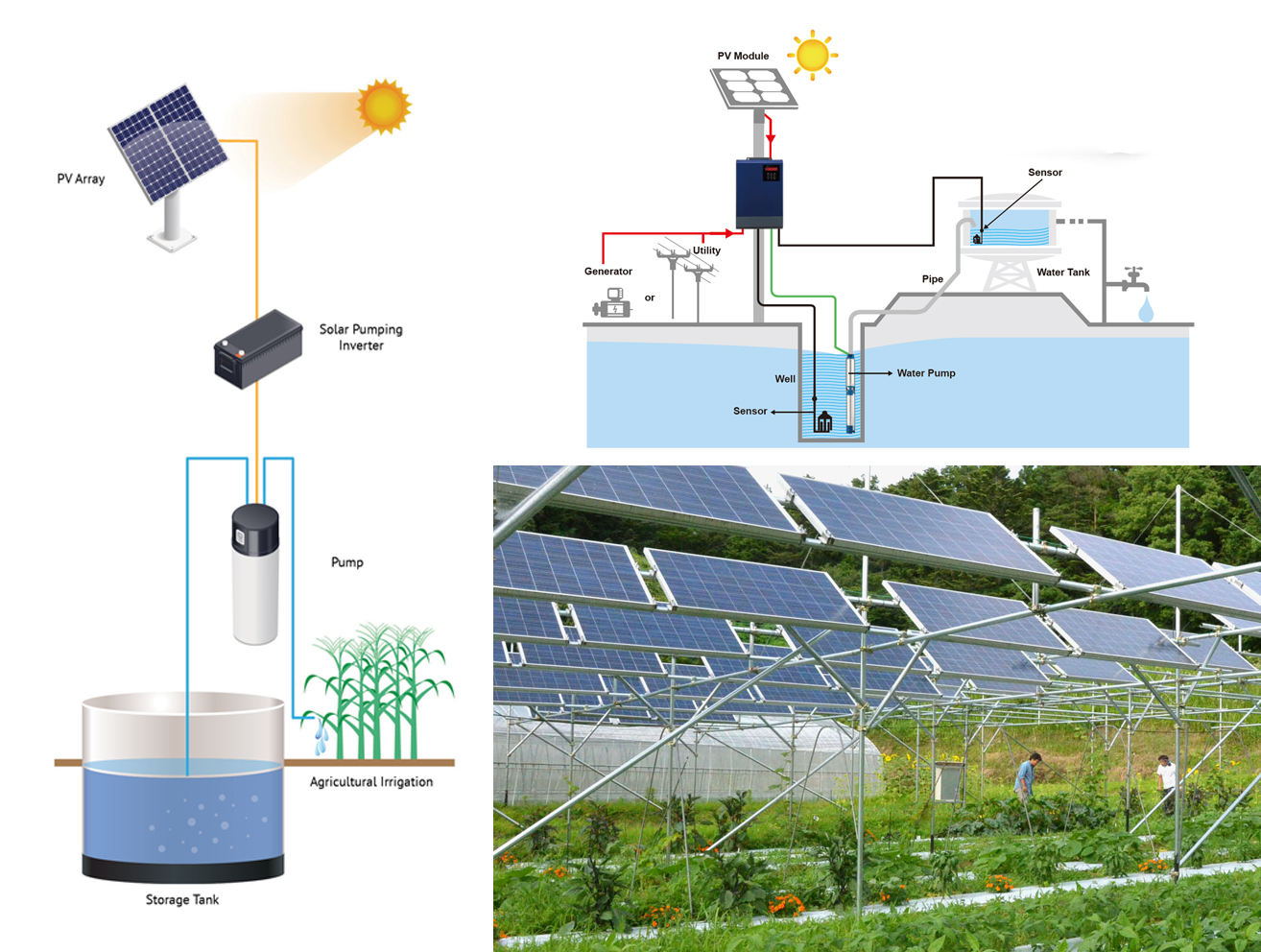
Pic. 2. Installations for local watering and daytime water storage by PV units.
Opponents of the use of renewable energy declare that PV stations simply occupy land on which it is possible to grow agricultural products, and therefore if they can be installed, it is only on land that is unsuitable for agricultural production.
Long-term observations of pilot agrivoltaic farms showed that this statement, to put it mildly, is untrue. This is illustrated in Fig. 3, which demonstrated the paradox of agrivoltaic – an increase in commodity production, both in the form of agricultural products, and in the form of pure renewable energy, which can be used, including for the same agriculture. If you place the PV modules on the supports so high that they can start up conventional agricultural equipment, the overall efficiency of land use will be about 1.6 times higher even without special advantages from using electricity to intensify agricultural processes.
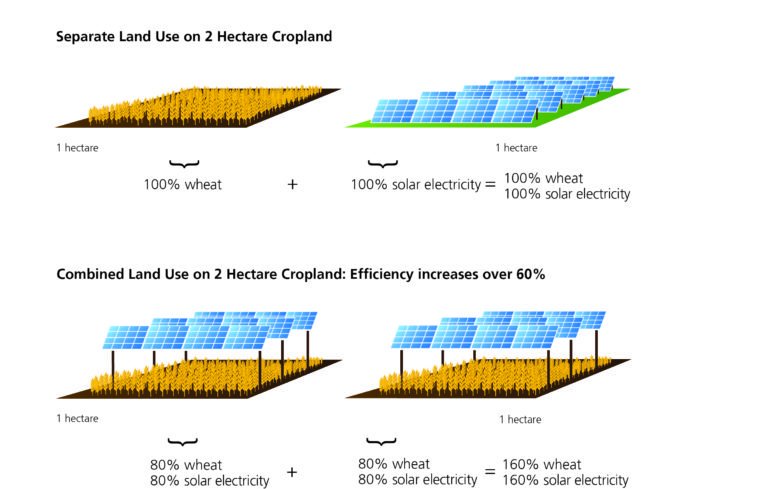
Pic. 3. Increase in the efficiency of land use on agrivoltaic farms.
Solar power plants for farmers are one of the key competencies for Avenston, which provides a full range of necessary services, starting from pre-engineering stages to the maintenance of already built PV power plants or systems. A list of our solar projects includes a large number of designed and built commercial solar power plants. If you have plans to build your own solar power plant of any type and size, please contact Avenston. We will be happy to help you implement your project in the most optimal way.
Read more:
Solar simulators – new opportunities for PV business
The development of solar power, which has recently been strongly stimulated by the fall in the cost of PV. It is quite difficult to appreciate the attractiveness of the location of the PV project and choose a promising business model for it.
Fundamentals of the crystalline silicon solar modules’ manufacturing
Article reviews the technology of solar modules based on silicon photovoltaic cells. Briefly considered a standard process that is used with small changes on the majority of today’s industrial enterprises producing silicon solar modules.
Conference “Financing Energy in Ukraine: Green Future is coming”
Dr Dmytro Lukomskyi, CEO of Avenston, attended the conference “Financing Energy in Ukraine: Green Future is coming” took place at Hilton Hotel in Kyiv on 14th of June 2018.
Rooftop solar PV power plants in Ukraine
Prospects for the development of rooftop commercial solar power plants. Advantages and applications. Frequently asked questions about solar power plants.