
Renewable Energy in Ukraine
Types of Solar Inverters for PV Power Plants
Updated in 2026 to reflect current solar inverter technologies and their application in PV projects
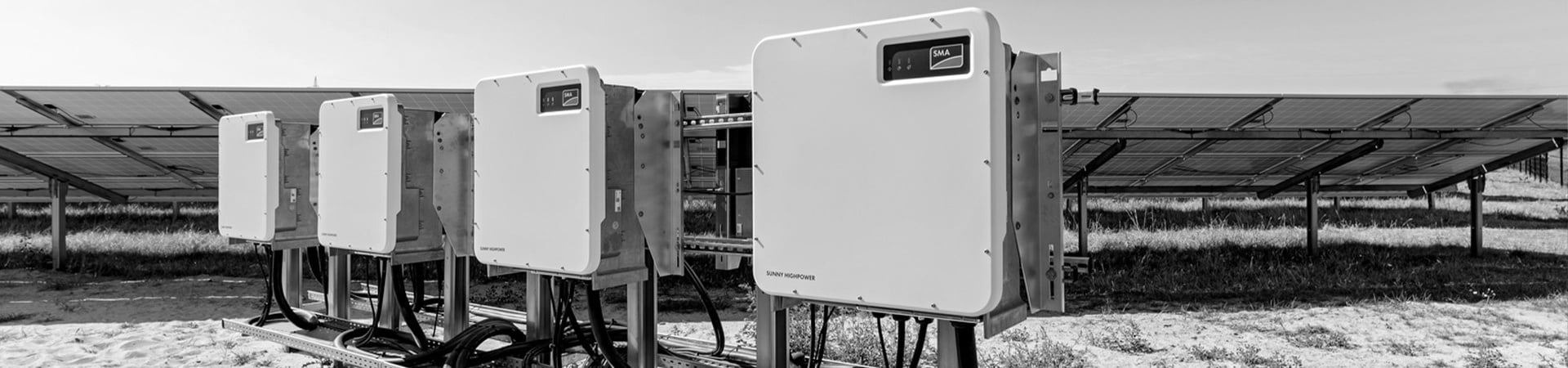
Solar inverters are one of the key components of photovoltaic (PV) power plants. They convert the direct current (DC) generated by solar modules into alternating current (AC) that can be used by electrical consumers or supplied to the power grid.
For modern solar projects, an inverter is not only a power conversion device. It also performs important functions related to grid interaction, operational monitoring, system protection, and energy management. The selected inverter technology influences the efficiency, reliability, and long-term performance of a photovoltaic power plant.
Role of Solar Inverters in PV Systems
The main function of a solar inverter is to convert electricity generated by photovoltaic modules into a form compatible with the electrical grid.
Modern inverters perform several important tasks:
- DC-to-AC conversion — transforming electricity generated by solar modules into alternating current;
- Grid synchronization — controlling voltage, frequency, and power quality according to grid requirements;
- Energy monitoring — collecting operational data and providing information about plant performance;
- System protection — supporting safe operation under changing environmental and electrical conditions.
For commercial and utility-scale solar projects, inverter selection is evaluated together with other key project parameters, including plant capacity, grid connection requirements, environmental conditions, operational strategy, and lifecycle costs.
Key Parameters for Solar Inverter Selection
Each inverter has technical characteristics that should be considered during project design and equipment selection.
The main parameters include:
- rated power capacity;
- input voltage range;
- output voltage and grid connection parameters;
- efficiency level;
- power factor;
- protection functions;
- operating temperature range and environmental requirements;
- communication and monitoring capabilities;
- warranty conditions;
- compatibility with photovoltaic modules and other system components.
The optimal inverter solution depends on the specific requirements of each solar project.
Main Types of Solar Inverters
Solar inverters are generally divided into three main categories: on-grid, off-grid, and hybrid inverters.
1. On-Grid Solar Inverters
On-grid inverters are the most common type of solar inverter used in grid-connected photovoltaic power plants.
These inverters convert electricity generated by solar modules into AC power and synchronize the output with the electrical grid. They are widely used in commercial and utility-scale PV projects where electricity generation is supplied directly to the grid or consumed by connected facilities.
Typical configuration:
PV modules → inverter → transformer → electrical grid
Main characteristics:
- direct connection to the electrical grid;
- high conversion efficiency;
- suitable for commercial and utility-scale PV projects;
- no built-in energy storage capability.
On-grid inverter systems remain the standard solution for most photovoltaic power plants connected to centralized or local electricity networks.
2. Off-Grid Solar Inverters
Off-grid inverters are designed for photovoltaic systems that operate independently from the electrical grid.
Such systems are typically used in locations where grid connection is unavailable or where independent power supply is required. Off-grid solutions usually include battery storage to balance electricity generation and consumption.
Typical configuration:
PV modules → charge controller → battery storage → inverter → consumers
Main characteristics:
- independent operation without grid connection;
- integration with battery energy storage systems;
- suitable for remote facilities and backup power applications.
The main purpose of off-grid systems is providing autonomous electricity supply rather than exporting electricity to the grid.
3. Hybrid Solar Inverters
Hybrid inverters combine the functionality of grid-connected systems and energy storage management.
They can control energy flows between photovoltaic generation, battery storage, electricity consumers, and the grid. This makes them an important component of modern distributed energy systems and hybrid PV+BESS projects.
Typical configuration:
PV modules + battery storage + grid → hybrid inverter → consumers/grid
Main characteristics:
- integration of solar generation and battery storage;
- flexible energy management;
- ability to optimize energy flows;
- support for backup power applications.
With the growing adoption of battery energy storage systems (BESS), hybrid inverter solutions are becoming increasingly important for projects requiring greater flexibility and energy management capabilities.
Solar Inverters and BESS Integration
The development of battery energy storage systems is changing the role of power conversion technologies in renewable energy projects.
In PV+BESS systems, inverter and power conversion solutions enable:
- storage of excess solar generation;
- balancing of electricity production and consumption;
- improved utilization of renewable energy;
- participation in electricity market mechanisms where applicable;
- enhanced grid flexibility.
For large-scale renewable energy projects, inverter technology is considered as part of a broader technical and investment strategy that includes generation assets, energy storage, grid infrastructure, and operational management.
How to Select the Right Solar Inverter
The selection of inverter technology should consider both technical and commercial factors:
- project scale and configuration;
- expected operating conditions;
- grid connection requirements;
- energy storage integration;
- monitoring and control requirements;
- reliability and lifecycle performance.
A properly selected inverter solution contributes to stable plant operation, efficient energy production, and predictable long-term asset performance.
Avenston Experience with Solar Inverter Technologies
Avenston has experience evaluating and integrating solar inverter technologies within photovoltaic project development and implementation in Ukraine.
Our approach focuses on selecting technical solutions that correspond to project requirements, operational objectives, and long-term asset performance.
Learn more about Avenston’s approach to renewable energy projects through Project Development, Investment Partnerships, Project Implementation, and Asset Management, or explore everything we do in What We Do.
Read more:
New photovoltaic modules technologies
Over the past few years, the PV modules technology changed dramatically. Today we have a complex market with various parameters and properties of solar panels. We prepared useful material that will help potential investors not to make mistakes.
Energy strategy slows down development of RES
The draft updated Energy Strategy of Ukraine for the period up to 2030 slows down the development of renewable energy sources and may stop the flow of foreign investment into this sector.
Is it possible a complete transition of Ukraine to renewable?
A lively global debate continues in maintaining a balance between fossil fuels and nuclear energy, on the one hand, and renewable sources such as hydropower, solar, wind, geothermal and biomass, on the other.
Prospects for the development of the solar energy industry
Dmytro Lukomskyi, the CEO of Avenston, an investor and top manager who got the Person of the Year award in the Eastern European sustainable energy industry at SEF Awards 2018 and SEF Awards 2019, covered for LDaily readers the issues of solar energy and their causes, as well as proposed solutions that will help the industry get out of the crisis.